
Home · A Day at the Studio
A Day at the StudioAn hour a week that doesn't feel like school.
A Scholar's Studio session is 60 minutes. Here is what's actually happening, minute by minute, and what we're really teaching when it looks like the students are just playing.
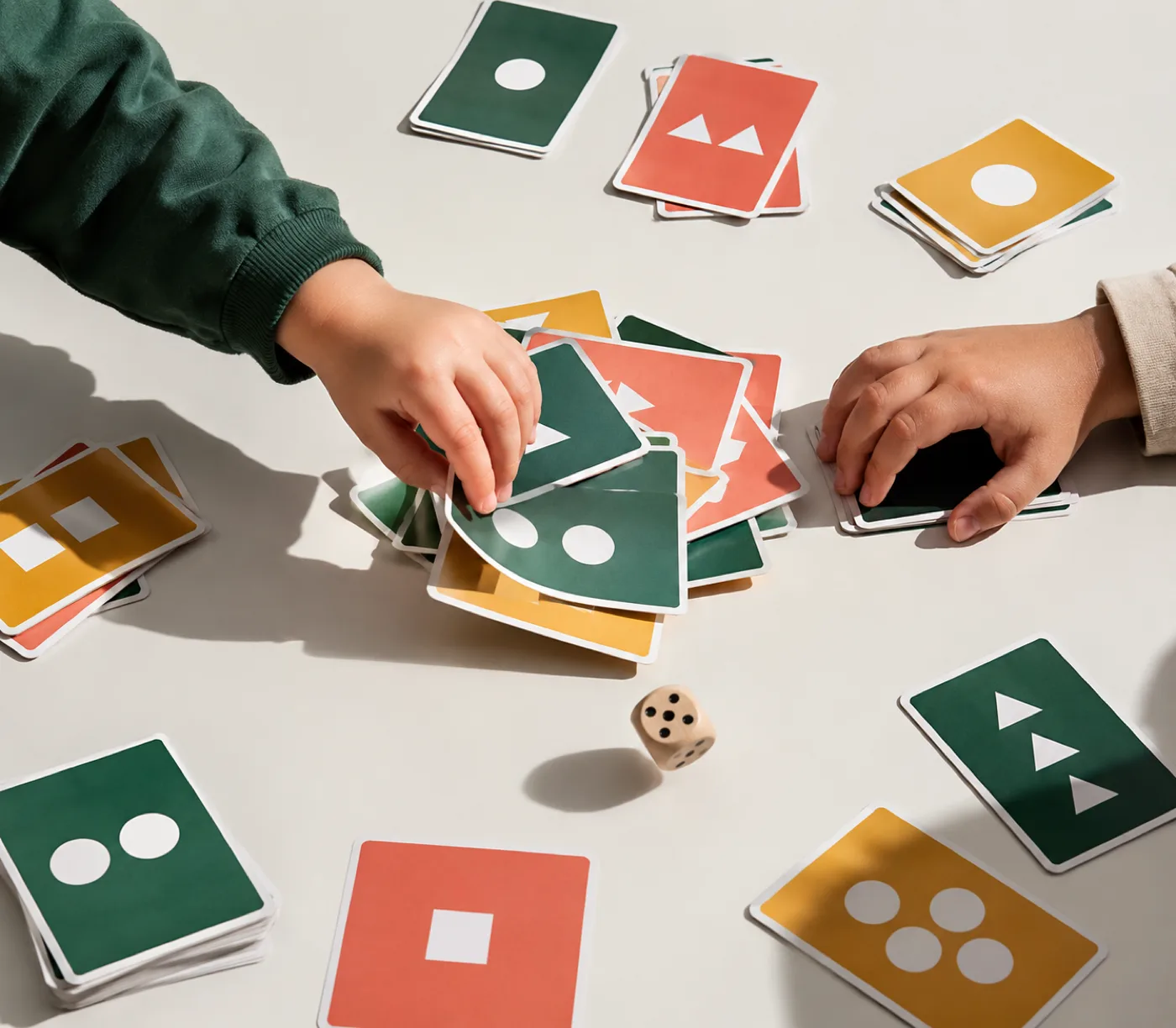
Launch
Students drift in from school with a snack table and soft transition. Once everyone is settled, we open with a puzzle, a game, a challenge, a story, or a scenario tied to today's concept. Purpose: generate curiosity.
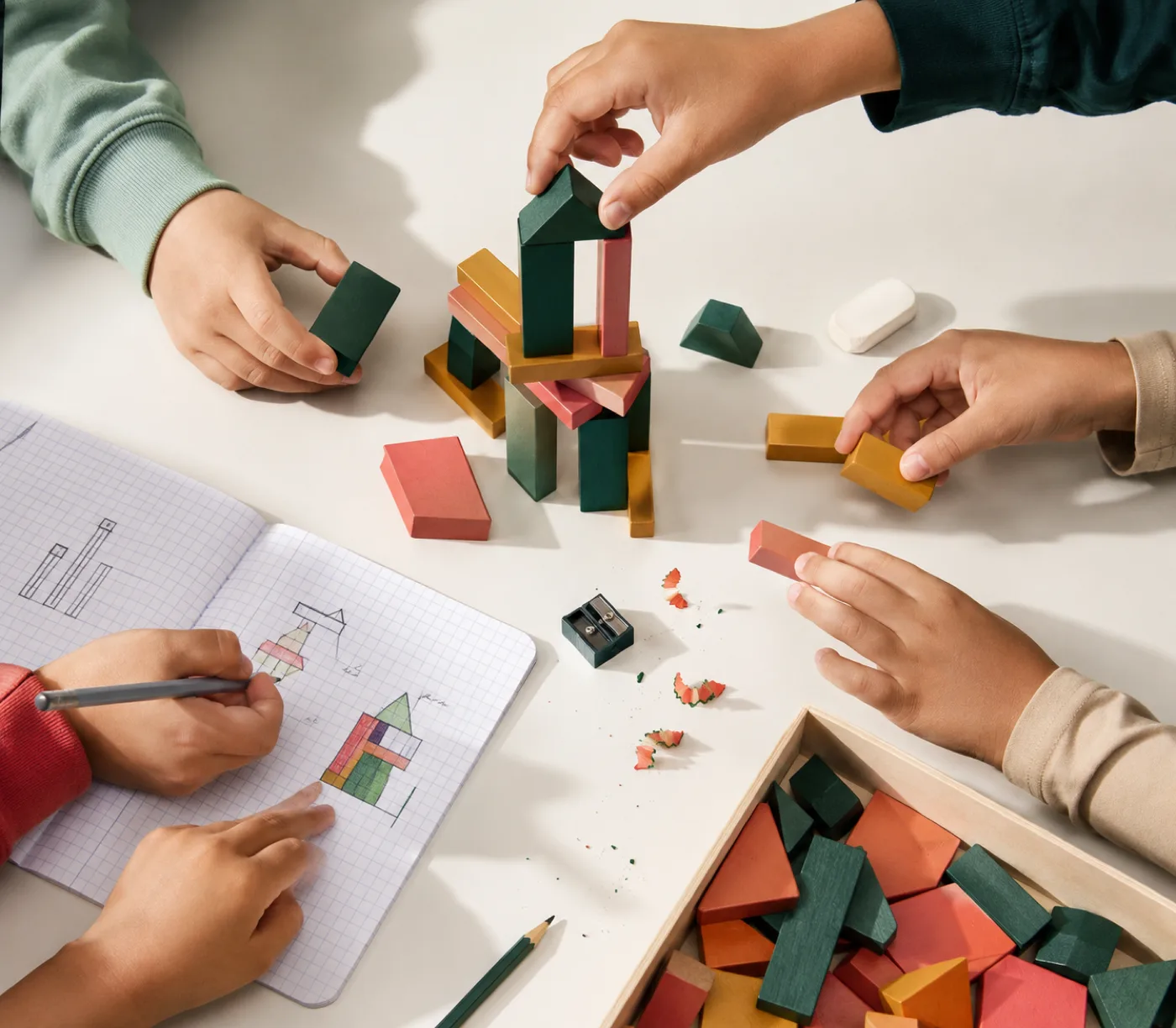
Explore
Hands-on investigation using concrete materials. Students meet the concept with real objects in their hands: blocks, cubes, cards, counters. Whatever makes today's idea take a physical shape. Purpose: develop conceptual understanding.

Discuss
Students share strategies and observations. They explain their thinking to each other, defend their reasoning, and compare approaches. Purpose: develop reasoning and communication.

Apply
Students solve a challenge problem or a real-world task using the concept from the Explore block. This is where try, fail, try again gets practiced. Purpose: transfer learning.

Extend
A challenge for students ready for deeper exploration. A harder version of the same problem, an open-ended variation, or a what if we… question. Only when there is time and the group has runway.